
Back-to-School Electrical Safety: Preparing Your Home for Busy Schedules
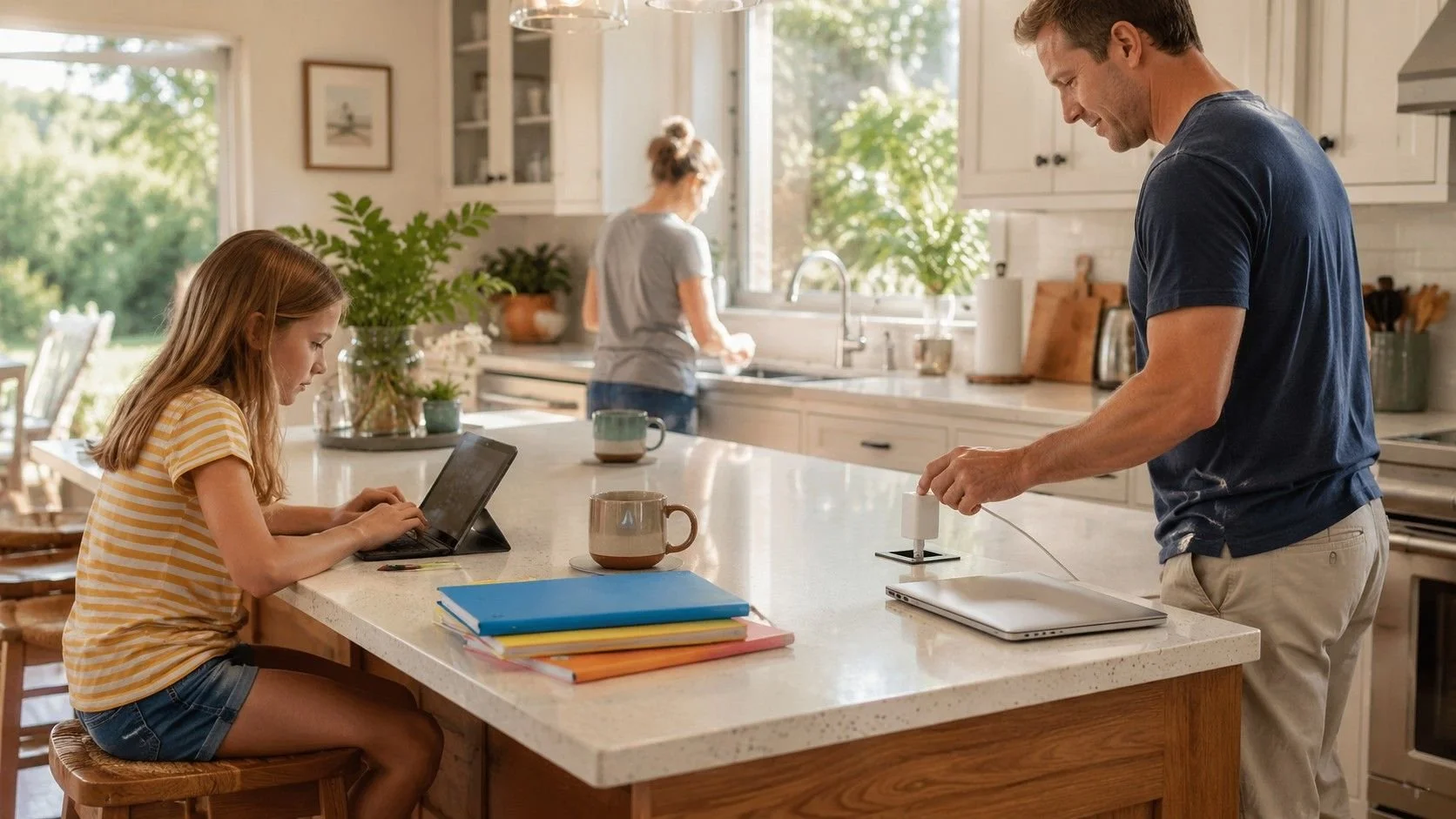
As the school year gets underway, household routines shift fast. Mornings become a rush of hair dryers, laptop chargers, and kitchen appliances, while afternoons bring kids home to plug in tablets, video game consoles, and study lights.
With more electronics running simultaneously, and kids spending more time managing their own devices, a quick check of your home’s electrical setup can help keep your morning routine running smoothly and safely.
Here are a few practical steps to prepare your home's electrical system for the busy school season ahead.
Evaluate High-Traffic Charging Stations
Between school-issued laptops, personal phones, and tablets, the average family has several devices that need charging every evening.
To keep charging areas safe and organized:
· Avoid piggybacking surge protectors: Daisy-chaining power strips into one another overloads the primary wall outlet and creates a fire hazard.
· Use dedicated surge protectors: Plug electronics into high-quality surge protectors rather than standard extension cords, especially for expensive school laptops or desktop computers.
· Charge on hard surfaces: Teach kids to charge devices on desks, tables, or countertops rather than beds, couches, or under pillows where heat cannot dissipate.
Check Outlets in Morning Warm-Up Zones
Bathrooms and bedrooms experience heavy electrical demand during early morning prep. Hair dryers, straighteners, and curling irons draw significant power and can easily trip circuit breakers if plugged into the same circuit as other appliances.
Keep these safety checks in mind:
· Verify GFCI outlets in bathrooms: Ground Fault Circuit Interrupter (GFCI) outlets are designed to shut off power instantly if water comes into contact with an electrical current. Test your bathroom outlets by pressing the "Test" button—if the "Reset" button pops out and cuts power, the outlet is working properly.
· Look for loose wall outlets: Outlets that feel loose when you plug something in can create arc faults or overheating inside the wall. If a plug sags or falls out easily, the outlet needs to be replaced.
Tidy Up Power Cords in Study Spaces
Homework areas often collect a mess of power cords under desks and around chair legs. Exposed cords pose trip hazards and can become damaged over time if pinched under heavy furniture.
Keep study spaces safe by:
· Inspecting power cords for fraying, exposed wiring, or cracked insulation.
· Running cords along walls using cord clips rather than stretching them across walkways.
· Keeping power strips off carpeted floors if they are plugged into high-draw equipment.
Address Tripped Breakers Promptly
If using a microwave while the coffee maker runs, or plugging in a hair dryer while a bedroom TV is on, causes a circuit breaker to trip, your system is telling you that the circuit is overloaded.
While resetting a breaker occasionally is not unusual, a breaker that repeatedly trips indicates that the circuit is carrying more demand than it can safely handle. Spreading high-wattage appliances across different outlets or having a dedicated circuit installed for heavy-use areas can resolve the issue safely.
A Simple Safety Check for Peace of Mind
Taking a few minutes to inspect outlets, organize charging stations, and setting basic safety habits with your family helps keep your home running smoothly as school schedules ramp up.
If you spot warm outlet covers, buzzing sounds from switches, or breakers that refuse to stay reset, reach out to one of Standard’s expert electricians to address the underlying issue before it interrupts your family's routine.